How Sun, Saltwater, and Stress Impact Hair Health
In Hawaiʻi, daily life often revolves around the outdoors—long days in the sun, time in the ocean, and an active, fast-paced lifestyle. While these are all part of what makes living here so unique, they can also have a cumulative effect on hair health over time.
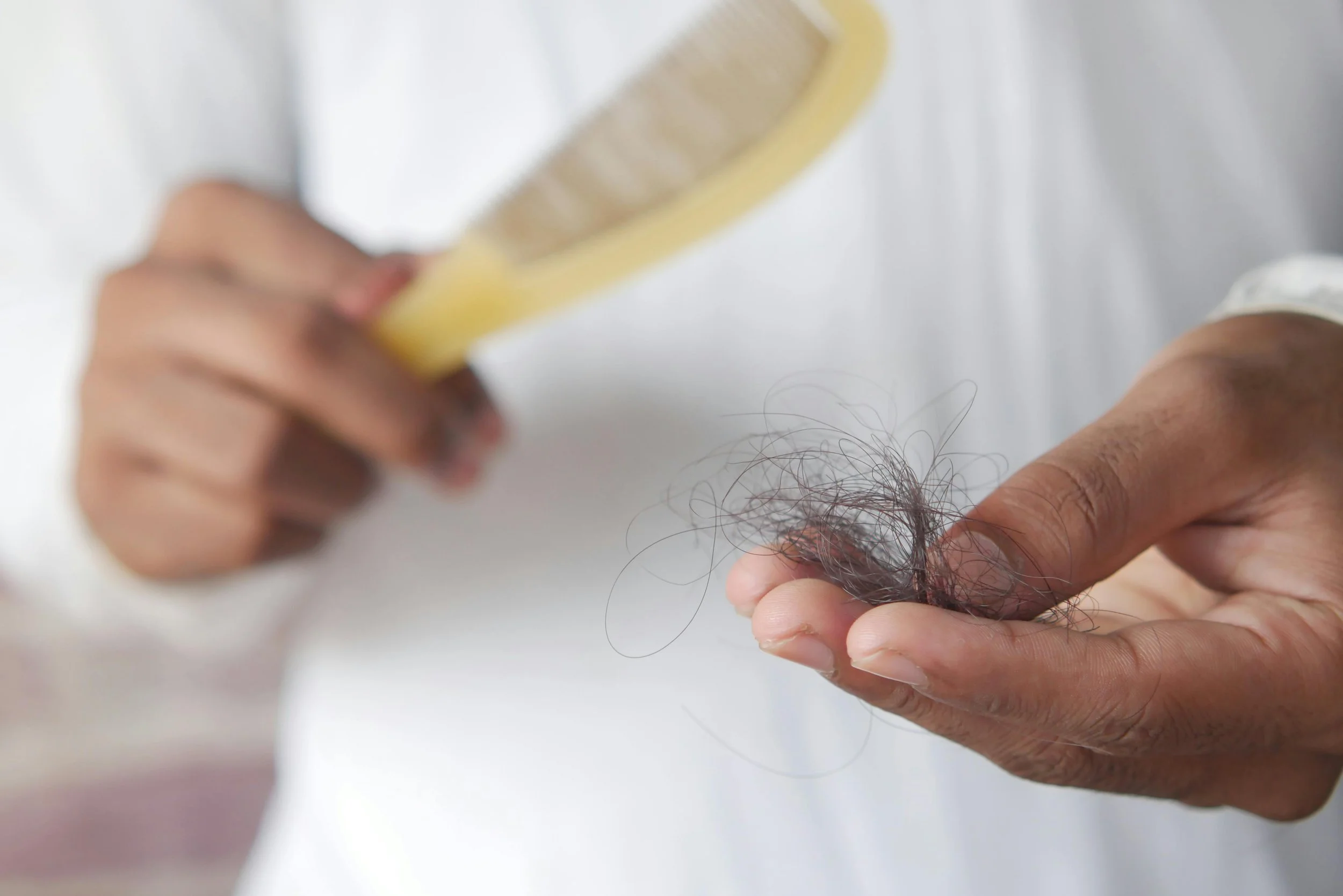
If you’ve noticed changes in thickness, increased shedding, or dryness, environmental and lifestyle factors may be playing a larger role than you think.
Understanding how sun exposure, saltwater, and stress affect your hair can help you take a more proactive approach to maintaining strong, healthy growth.
How sun exposure affects the scalp and hair
Just like your skin, your scalp is vulnerable to UV exposure. Prolonged sun exposure can damage both the hair shaft and the hair follicle, leading to weakened strands and changes in overall hair quality.
Over time, UV exposure can:
Dry out the hair shaft, making it more brittle
Break down protein structure in the hair
Irritate or inflame the scalp
Contribute to long-term follicle stress
In a tropical climate like Hawaiʻi, where sun exposure is consistent year-round, these effects can accumulate quickly—especially without protection.
Wearing hats, using protective products, and limiting peak sun exposure can help reduce damage and preserve both scalp and hair health.
The impact of saltwater on hair
Ocean swimming is part of everyday life on Oʻahu, but saltwater can strip the hair of its natural oils, leaving it dry, rough, and more prone to breakage.
Frequent saltwater exposure can lead to:
Dehydrated hair strands
Increased tangling and breakage
Loss of shine and smoothness
Weakened overall hair structure
While occasional ocean exposure is not harmful, repeated exposure without proper care can make it more difficult for hair to retain moisture and strength.
Rinsing with fresh water after swimming and using hydrating treatments can help restore balance and protect the hair.
How stress affects hair growth
Stress is one of the most overlooked factors in hair health. Both physical and emotional stress can disrupt the natural hair growth cycle, pushing more follicles into the shedding phase.
This condition, often referred to as telogen effluvium, can result in noticeable thinning or increased shedding weeks to months after a stressful event.
Chronic stress can:
Shorten the hair growth phase
Increase hair shedding
Weaken follicle activity
Impact overall scalp health
In a busy, high-demand lifestyle, these effects can build gradually, making it important to address stress as part of a broader approach to hair health.
How these factors work together
Sun, saltwater, and stress don’t act independently. In many cases, they overlap and compound one another.
For example:
Sun exposure weakens the hair shaft
Saltwater strips moisture and increases brittleness
Stress disrupts the growth cycle
Together, these factors can accelerate thinning, reduce density, and affect the overall appearance and feel of your hair.
This is why a comprehensive approach—addressing both environmental exposure and internal factors—is key.
Supporting healthier hair in Hawaiʻi
Maintaining strong, healthy hair in a tropical environment requires consistency and balance.
Simple habits can make a meaningful difference:
Protect your scalp from prolonged sun exposure
Rinse hair after ocean swimming
Use hydrating and strengthening hair products
Stay well hydrated
Manage stress through lifestyle and routine
These foundational steps help protect existing hair while supporting a healthier environment for growth.
When to consider treatment
If you’re noticing ongoing thinning, reduced density, or increased shedding, it may be time to consider additional support.
Treatments like PRP hair restoration can help stimulate follicle activity and improve scalp health by delivering concentrated growth factors directly to the areas that need it most.
This type of regenerative approach works alongside your body’s natural processes, helping to strengthen hair over time rather than offering a temporary solution.
A balanced approach to hair health
In Hawaiʻi, environmental exposure is unavoidable—but with the right approach, it doesn’t have to define your hair health.
By understanding how sun, saltwater, and stress impact your hair, and taking steps to support both your scalp and overall well-being, you can maintain stronger, healthier hair over time.
If you’re unsure where to start or want to explore treatment options, a consultation can help you better understand your hair and create a plan that aligns with your lifestyle.
The information provided in this article is for educational and informational purposes only and is not intended as medical advice. Individual results may vary.
While we strive to provide accurate and up-to-date information, this content should not be relied upon as a substitute for professional medical evaluation, diagnosis, or treatment. Always seek the advice of a qualified healthcare provider regarding any medical or aesthetic concerns.